
The Briefcase #55: The World’s Weirdest Tax Deductions
Written by: AccountingCPD | Published: 13th Aug 2026 | Updated: 13th Aug 2026
Spend enough time as an accountant and you’ll hear all sorts of theories about what people think they can claim as a tax deduction. Barristers have argued that the suits they wear in court should count as business expenses. Television presenters have tried to deduct haircuts because appearing on camera was part of their job. Neither got too far – even the one the lawyers were behind (although the wigs are tax deductible).
That said, a lot of tax law is weird. Well, enough of it is weird for us to write roughly 1,000 words on it.
Here are five tax deductions that sound absurd, but are perfectly legitimate.
🐕 Dogs and cats
Most people think of dogs and cats as pets; beloved members of the household. Tax authorities, on the other hand, think of them as business assets.
In the UK, a genuine guard dog protecting business premises can qualify as a legitimate business expense, with costs such as food and veterinary bills potentially allowable. Across the Atlantic, a famous US tax case involved a junkyard owner who deducted cat food because the resident cats controlled rats and snakes around the business.
To the tax authorities, the important question was whether they were performing a genuine business function. They didn’t care if the junkyard owner also cuddled his assets every once in a while.
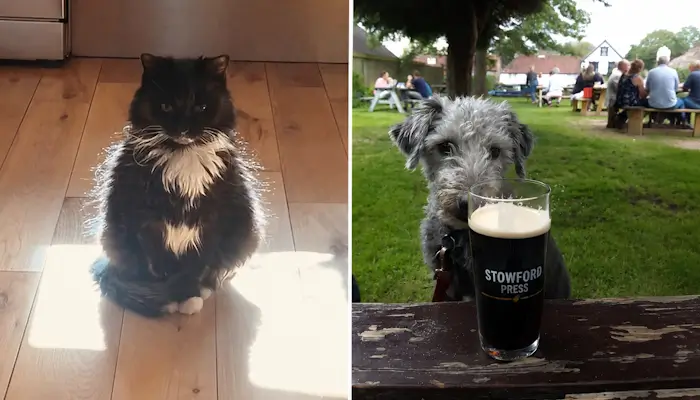
For example, here is the entire AccountingCPD security team hard at work. (If HMRC are reading this, this is very much a joke.)
🐝 Bees?
If you think guard dogs are intimidating, imagine being chased by several thousand bees. If you watched My Girl at an emotionally vulnerable time in your life, you can understand how terrifying that would be. Fortunately, this deduction isn’t actually about security. It’s about honey.
The Australian Taxation Office treats bees kept for a honey production business as livestock, which means they’re trading stock for tax purposes. Rather than attempting the impossible task of valuing tens of thousands of individual bees, the ATO rather sensibly allows beekeepers to value a live hive instead. It even publishes guidance on how to calculate that value.
It might seem odd, but honey is a commercial product, beekeeping is a genuine farming business, and healthy bee populations are essential pollinators. In many parts of the world, declining bee populations have become a major environmental concern, making commercial beekeeping more important than ever.
Not so funny now, is it?
🌳 Hawaii’s Exceptional Trees
Let’s move away from fauna and onto flora.
Hawaii has a long-running “Exceptional Tree” programme that recognises trees of particular age, size, rarity, beauty, historical or cultural importance. To encourage landowners to preserve them, qualifying maintenance costs can attract a state tax deduction.
Unlike some of the entries on this list, this one is using tax deductions for society’s benefit, and is a bit more dignified than claiming for dog food. Trees are obviously good – we don’t need to sell you on the concept of trees – and having cool looking ones around is a bonus. If you ever find yourself in Hawaii, make sure to be on the lookout for Exceptional Trees.
It’s probably one of the few tax deductions where the asset is older than your Ford Fiesta company car.

💪 Body oil
If you’ve ever watched a bodybuilding competition – and of course you have because we all have – you may have noticed that the competitors come on looking like a freshly valeted car.
Professional bodybuilders often use posing oils, tanning products and similar competition-specific items to enhance muscle definition under bright stage lighting. Because we have to accept that these products are used solely for competition rather than everyday life, they can qualify as legitimate business expenses for professional bodybuilders.
So, if you ever catch a bodybuilder walking into Lidl with an eerie sheen to them, please alert your nearest tax official.
💉 Chesty Love
This is probably the deduction that appears on the most “weird tax deductions” lists and, not to be left out, it’s appearing on our one, too.
In Hess v Commissioner (1994), exotic dancer Cynthia Hess underwent surgery that increased her bust to an extraordinary 56FF, with implants weighing around 10 pounds each. Rebranded under the stage name “Chesty Love”, her performance fees almost doubled.
The US Tax Court accepted that these weren’t ordinary cosmetic implants, noting that they actually damaged her health and personal life. In effect, they were treated as part of her professional costume and allowed as a business asset.
So, if you’re willing to spend a lot of money to ruin your personal life and enhance your professional life, you might be able to claw back a bit of it, which must feel really great.
🧠 Final thoughts
Tax law has a reputation for being dry, but every now and then it produces stories that are completely off the rails, like the ones we’ve detailed above. Watch the party’s atmosphere shift as you bring up the ATO’s treatment of bees. They all love it! They’re clamouring for more tax stories and, thankfully, you’ve come equipped.
So, the next time someone confidently tells you they’ve found a “clever” new tax deduction, you can smile smugly, safe in the knowledge that you’ve seen weirder. But whether it succeeds will depend on the same question it always has – what was it actually for?
Ready to power up your CPD?


Updated 13th Aug 2026 | 5 min read