

IFRS: Accounting for Expenditure
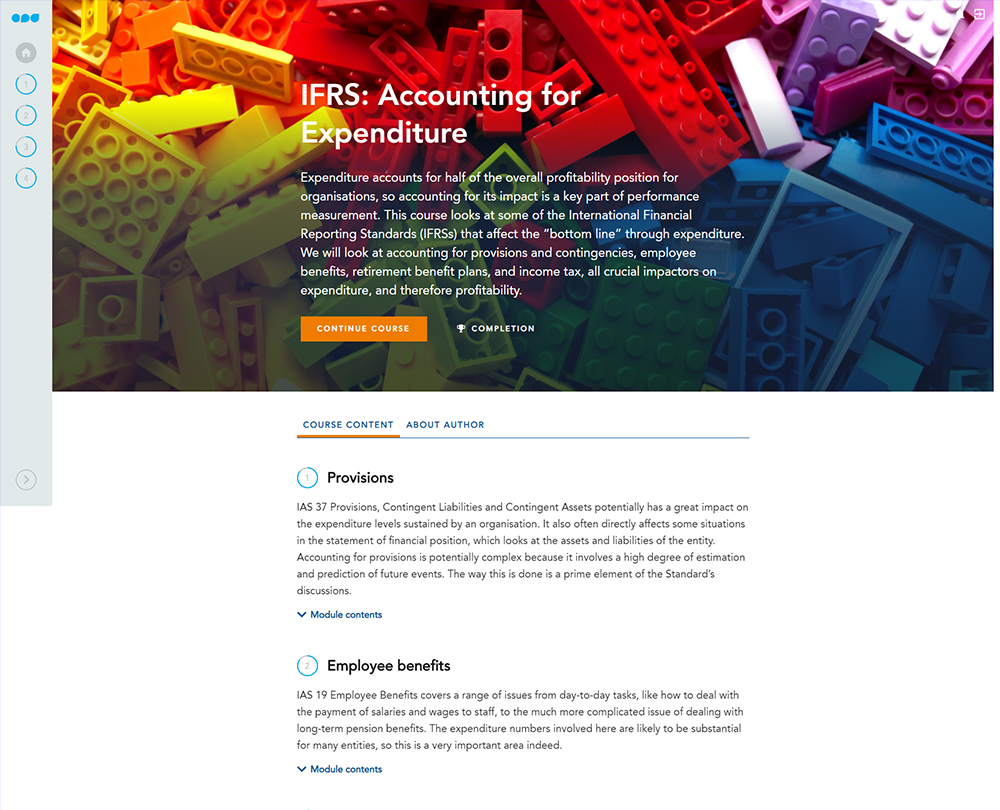
This course explains the standards and all the pitfalls involved in provisions and contingencies (IAS 37), employee benefits and retirement benefit plans (IAS19 and IAS 26), along with the high-risk areas in the taxation of companies income (IAS 12).
£100 +VAT

IFRS: Accounting for Expenditure
£100 +VAT
IFRS: Accounting for Expenditure
This course is not currently available. To find out more, please get in touch.
This course will enable you to
- Understand the complexity of IAS 37 and make sound judgements when accounting for provisions, contingent liabilities and assets
- Deal competently with the enormous sums often involved in employee benefits and pensions whether under IAS 19 or IAS 26
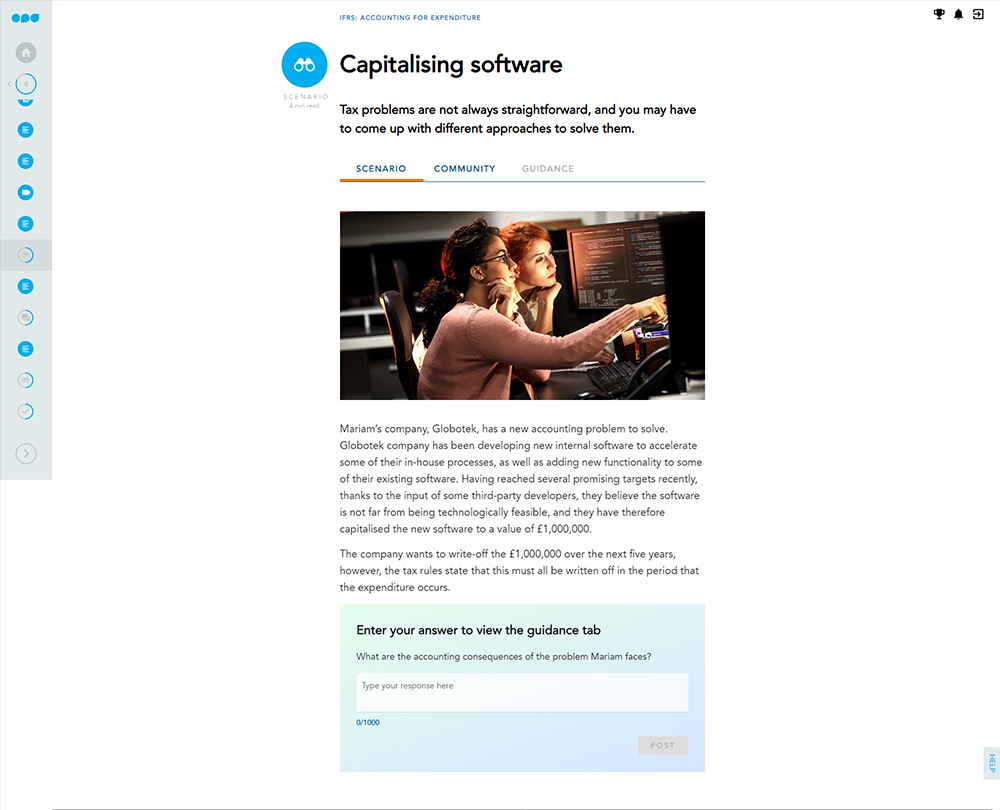
- Navigate your way through the maze of accounting for taxes on income outlined in IAS 12
About the course
Expenditure has a significant impact on an organisation’s financial success, often accounting for half of its overall profitability, and so accounting for its impact is a key part of performance measurement. The trouble is that it is fraught with difficulties as well.
This course will guide you through the International Financial Reporting Standards (IFRSs) related to expenditure. You’ll learn about the pitfalls involved in making judgements concerning provisions and contingencies under IAS 37, make sound decisions when dealing with employee benefits and retirement benefit plans, whether under IAS 19 or IAS 26, and be confident about your decisions in the high risk areas of accounting for taxation on income under IAS 12.
Contents
Provisions
Expenditure – the basics
IAS 37 explained
Objectives and scope of IAS 37
Key definitions
Provisions and other types of liability
Complying with the rules
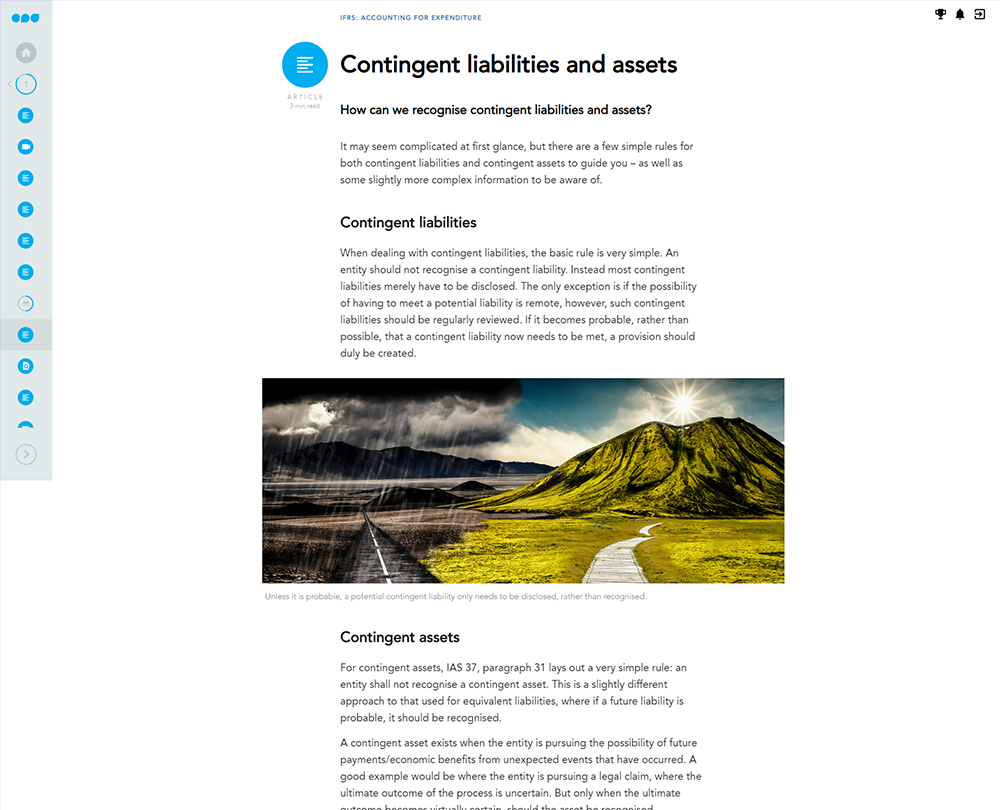
Contingent liabilities and assets
Establishing and changing provisions
Margin for error
Disclosure requirements
Employee benefits
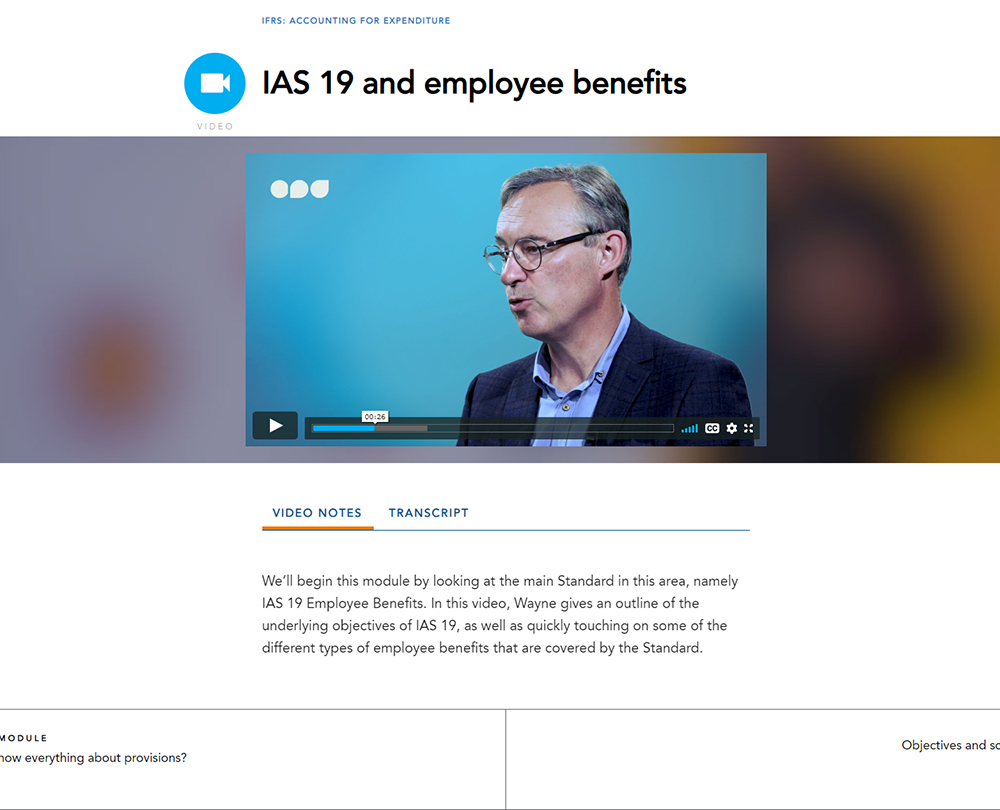
IAS 19 and employee benefits
Objectives and scope of IAS 19
Key definitions
Two types of plan
Defined contribution plans
Defined benefit plans
The impact of actuarial assumptions
Calculating for settlements
Measuring plan assets
Avoiding the pitfalls of employee benefits
The necessary disclosures
Retirement benefit plans
IAS 26 and the pension fund perspective
Objectives and scope of IAS 26
Defined contribution plans
Defined benefit plans
Present values
Actuarial present values
Presenting financial statements
A simple financial statement
Disclosures
Income taxes
Taxes due on corporate income
Objectives and scope of IAS 12
Key definitions
Deductible temporary differences
Current and deferred tax liabilities and assets
The complications of deferred tax assets and liabilities
Recognising current and deferred tax
Presenting tax assets and liabilities
Disclosures
How it works
Author

Wayne Bartlett
Wayne is an internationally acclaimed speaker and trainer on all aspects of public and private sector accounting and auditing standards. He has been instrumental in helping to develop the profession internationally and has taken lead roles in the development of new professional bodies and the accounting profession in Mozambique and Rwanda, and been extensively involved in developing financial reporting in many countries across the globe.
You might also like
Take a look at some of our bestselling courses